
The short answer
Start with the kind of experience your pub can host well
Useful pub entertainment can be competitive, social, performance-led, food and drink-led or community-led. Strong options include pub quizzes, darts or pool tournaments, bingo, table games, live music, open mic nights, tastings, themed evenings, watch parties, charity events and creative group activities.
Do not choose only by popularity. The better starting point is the fit between the idea, the room, the regular customer base, staff capacity, equipment, noise and the amount of setup the venue can repeat.
Use practical constraints to narrow the list
Space and equipment
Check floor space, tables, boards, screens, sound equipment and safe movement around the activity.
Staff involvement
Decide whether the event needs a dedicated host, scorekeeper, performer liaison or only occasional announcements.
Audience fit
Consider who already visits, who might participate, whether teams make sense and how non-participants experience the night.
Pace and duration
Estimate setup, start, breaks and finish. Avoid a format that depends on more rounds than the venue can complete.
Repeatability
Ask whether staff can prepare and run it again without rebuilding the process every week.
Noise and atmosphere
Match the volume and energy to neighbours, other customers and the character of the venue.
Activities PubPlay can help organize
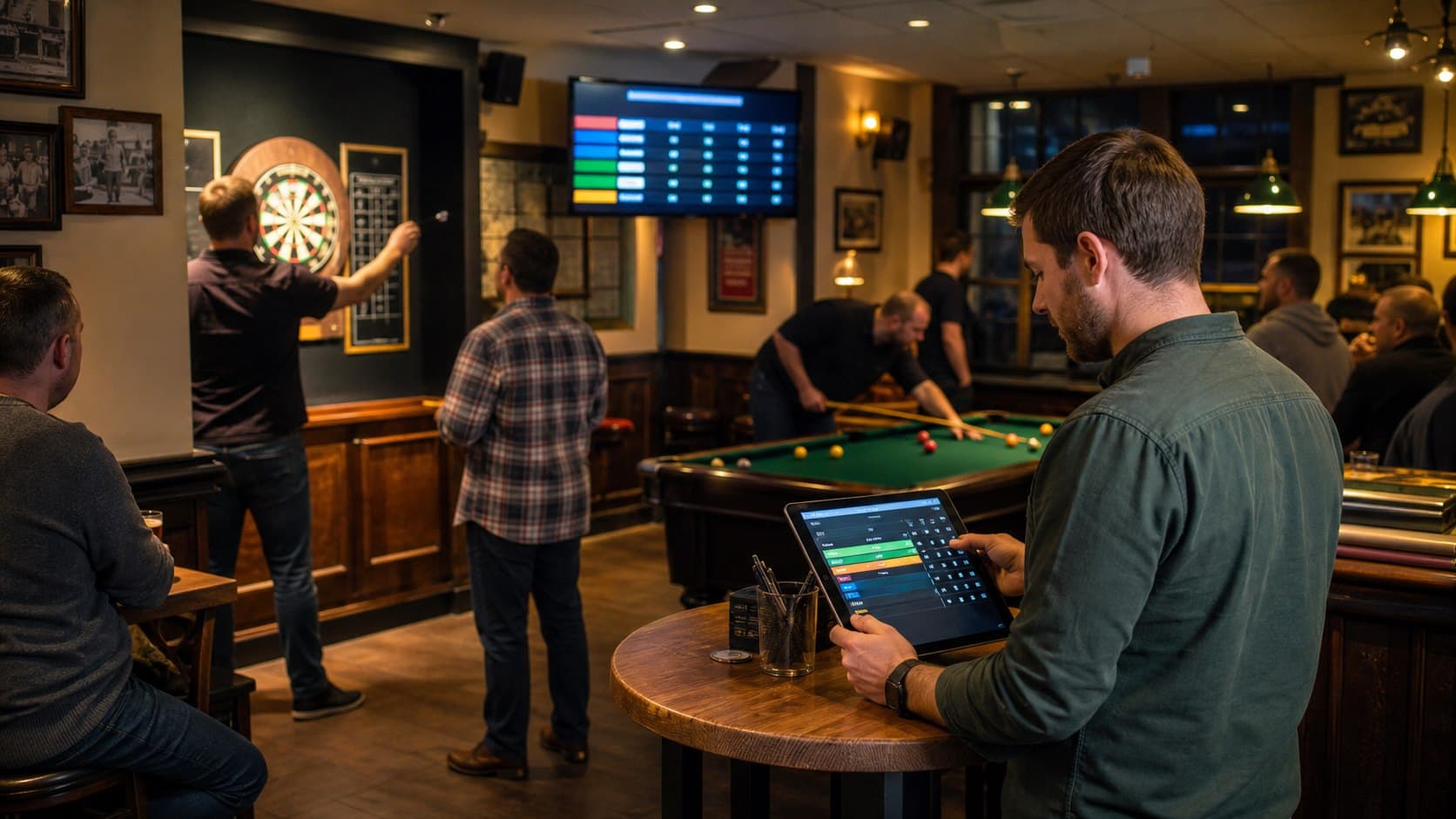
Darts and pool can work as round-robin or knockout competitions. A pub quiz can use host-led questions and team scoring. Bingo, dominoes, cribbage, skittles, shuffleboard, table football and custom games can use an appropriate supported event model where the venue remains responsible for the game rules.
PubPlay handles the participant and competition layer: browser joining, supported formats, fixtures or scores, standings and a browser TV display. It does not supply physical game equipment or operate the activity itself.
Review supported games and formats before choosing the digital setup.
Other entertainment ideas that do not need PubPlay
Live music, open mic nights, comedy, tastings, themed menus, craft or creative sessions, community meetings, charity events and suitable watch parties may be better choices for some venues. PubPlay does not manage these activities.
For performance-led events, think about booking, sound checks, licensing, stage space and communication with performers. For tastings or food-led evenings, focus on stock, service timing and clear booking information. Community events may depend more on local partnerships and accessibility than on competition software.
Plan quieter-night events as repeatable experiments
Many pubs schedule quizzes, games and community events on quieter weekdays. Choose a sensible first date, set a clear start time and describe exactly what customers can expect. A small, smoothly run event is more useful than an ambitious format that staff cannot complete.
After the event, review participation, timing, staff workload, equipment and customer questions. That evidence can guide the next date. Do not treat any event type as a guaranteed way to increase footfall or revenue.
A checklist for testing one event idea
Before committing to a recurring night
Fit
- Confirm space and equipment
- Choose the likely audience
- Estimate staff involvement
- Consider noise and spectator experience
Plan
- Set a date and start time
- Define booking or joining
- Write a short event description
- Set any rules or participation limit
Run
- Brief staff
- Prepare equipment
- Welcome participants
- Keep timing and communication clear
Review
- Note participant questions
- Review delays and workload
- Check what can be repeated
- Decide whether to adjust or replace the event